Shot at Dawn
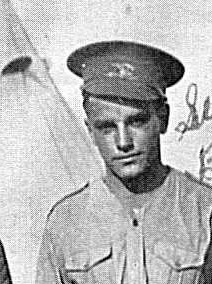
Private Stephen McDermott Fowles 718566 enlisted with the 107th Battalion on 16 February 1916. Stephen stood 5′ 9″ tall, 151 pounds, with dark complexion, brown eyes and black hair.

Little known of Fowles’ service as much of his service record expunged. Presumably transferred to the 44th Battalion in December of 1916. Son of Stephen Fowles and Flora McDermott of Austin, Manitoba. Born 13 June 1897 in Winnipeg, Manitoba.
Austin, Manitoba
Austin a charming unincorporated community recognized as a local urban district in western Manitoba. Nestled on the Trans-Canada Highway approximately 110 km (68 mi) west of Winnipeg. Austin a part of the Municipality of North Norfolk offering a unique blend of flat plains and low wooded hills.

Nineteen-year-old Stephen McDermott Fowles, a farmer from Austin, Manitoba made his way to Winnipeg in early 1916 to enlist with the CEF.
107th Battalion
Organized in November 1915 under the command of Lieutenant-Colonel Glen Campbell. Mobilized at Winnipeg, and recruited in Winnipeg. Embarked from Halifax 19 September 1916 aboard OLYMPIC, and later disembarked England 25 September 1916 with a strength of 32 officers, 965 other ranks.

Drafts of 170 to 16th Battalion, 200 to 1st Canadian Mounted Rifles and 70 to 44th Battalion in December 1916, which very likely included Private Stephen McDermott Fowles.
44th Battalion
The 44th Battalion organized in February 1915 initially under the command of Lieutenant-Colonel E R Wayland. Mobilized at Winnipeg and also recruited in Winnipeg. Draft of 5 officers and 249 other ranks sent to England on 4 September 1915. Draft of 10 officers and 500 other ranks from 44th and 45th Battalions sent to England on 1 June 1915. Embarked from Halifax 23 October 1915 aboard LAPLAND, and later disembarked England 30 October 1915 with a strength of 36 officers, 1076 other ranks. Disembarked in France 10 August 1916 with the 4th Canadian Division, 10th Canadian Infantry Brigade, and later reinforced by 18th Canadian Reserve Battalion.

Sixty other rank reinforcements arrived on 19 January 1917 while the battalion in the front line. Again, this group likely included Private Stephen McDermott Fowles. Lt-Col Davies reported to take command of the 44th on 22 January 1917.

The 44th Battalion relieved the 47th in right sub-section CARENCY sector on 30 January 1917. The following night, Private Joseph Rollit Taylor, not yet 18 years-of-age, killed in the trenches and later buried at Villers Station Cemetery.

Pte Fowles Wounded
Three days following the death of Pte Taylor, the 44th Battalion had a most successful raid by about 70 ranks on KENNEDY CRATER. One officer killed, and one wounded along with 10 other ranks (including, presumably, Pte Fowles).

Private Stephen McDermott Fowles shell wound to his left hand and admitted to No.12 CFA on 3 February 1917. To No. 13 CFA on the same day and released to duty on the 11th.

The medical files would normally number some 20 pages in a typical record, but these removed from Fowles’ service record – no evidence the wound self-inflicted.

Passchendaele
Fowles’ company in the forward area of Passchendaele since 21 October 1917, and two days later, Fowles reported missing. On 26 October 1917, Fowles arrested 45 km from Ypres and stated in his defense: “I left my unit in the forward area to try and get to Paris as I wanted to get married…I met Private Holmes…we then thought of giving ourselves up to the A.P.M.” He then stated he had “been in France nearly a year and was wounded at Vimy Ridge. I am 19 years old”.

Private William Holmes
Pte William Holmes arrested on 28 August 1917 and charged with desertion. During his FGCM, he stated “I joined the 44th Battalion in April, and I went over the top on 3rd June at the Triangle. I am not married. I noticed my nerves were in bad state previous to 21st August when I was under shell fire”.
Not deliberately committed
“Pte. Holmes is a young soldier and his action for which he was tried by a FGCM is put down to lack of realization of the seriousness of the consequences and I do not consider the crime was deliberately committed.”
Lt-Col Rhys D Davies statement during FGCM of Pte Holmes

Second Court Martial
Fowles’ company conduct sheet entered in evidence showing he had been AWOL in 1916 and had received three days of FP No. 1. In September of 1916, he again received 27 days of F.P. No. 1 for the same offense. The court found him guilty and sentenced him to death. Unlikely this time-line could be true, as Private Stephen Fowles’ record unblemished in September of 1916 (he embarked Canada on 18 September 1916).

Deliberately committed
“There is no doubt in my mind that this crime was deliberately committed and I recommend, most strongly, that the sentence of death, as passed on Pte Fowles, be carried out.”
Lt-Col Rhys D. Davies statement during FGCM of Pte Fowles

Sentence commuted
The Brig-General of the 10th Infantry Brigade, Sir David Watson, also recommended death. However, General Sir Henry Horn commuted the sentence to 10 years penal servitude and added, “and if Stephen Fowles behaves himself in prison, his sentence to be put before the Commander-in-Chief (Sir Alexander Haig) at the conclusion of three months.” Indeed, Fowles’s sentence, like that of Private Holmes, suspended and he returned to his unit.

Third Court Martial
As Col Davies predicted, Fowles deserted a third time and court-martialed, convicted and sentenced to death. Three times unlucky, Sir Henry Horne confirmed the sentence, as did ‘the butcher’, Field Marshall Douglas Haig.

Unsubstantiated accounts have Fowles charged for Desertion no less than three times, and the Ottawa Citizen reported on 6 November 2000 that he had been shot for being late from a personal leave. Only the proceedings of his second court martial on 12 December 1917 have been found.
“It was a terrible shame. We didn’t talk about it much. It wasn’t until much later that we realized that he was just late from a visit to a girlfriend. And they shot him for that.”
Ms Ballard, grandniece of Private Stephen McDermott Fowles
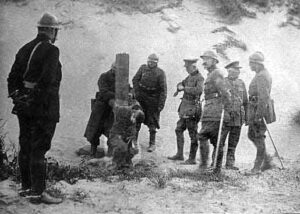
On 19 June 1918 at dawn, Private Stephen McDermott Fowles became one of 22 Canadians killed by their own. The battalion war diary noted one O.R. died on this day.

Stephen Fowles executed by firing squad for desertion at 03:50 on 19 June 1918. Long after his death, his parents learned he had been executed.
Villers Station Cemetery
The cemetery begun by the French but used by Commonwealth divisions and field ambulances from the time they took over this part of the front in July 1916 until September 1918. Associated particularly with the Canadian Corps with headquarters nearby and many of the graves in Plots V to X date from April 1917 and the Battle of Vimy Ridge.

Harold George Carter (73rd Bn) and Edward Fairburn (18th Bn) also Shot at Dawn and buried at Villers Station Cemetery. British soldier Private Frank Bateman, 1/4th Battalion, Yorks & Lancs Regiment also executed for desertion on 10 September 1918.

Contact CEFRG


