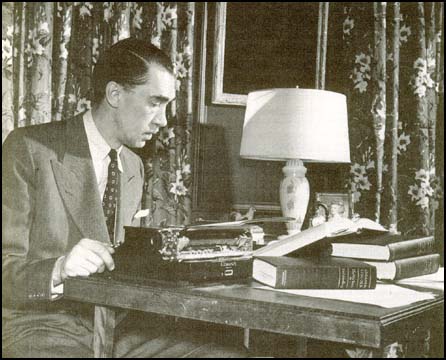
Private Robert E Sherwood of the Royal Highlanders of Canada became an award winning Pulitzer Prize playwright following the Great War.
Pulitzer Prize Winner

Early Life of Robert Sherwood
Born in 1896, his mother Rosina E Sherwood and father Arthur Murry Sherwood of Westport, NY, USA. A great-grandnephew of the Irish nationalist Robert Emmet, executed for high treason after leading the Irish rebellion of 1803. His relatives also included three other notable American portrait artists: his aunts, Lydia Field Emmet and Jane Emmet de Glehn, and his first cousin, once removed, Ellen Emmet Rand.

MIKAN No 2835979
Enlistment of Pte Robert E Sherwood
Six months Officer’s training in the USA, but apparently rejected due to his height. Following some time spent at Harvard University, Robert Emmet Sherwood 2075473 enlisted 3 July 1917 with Royal Highlanders of Canada (RHC) in Montreal, 2nd Reinforcing Company, 5th Royal Highlanders of Canada.

A huge man, Robert stood between 6′ 5″ and 6′ 8″ tall, 167 pounds, with white complexion, brown eyes and fair hair. He had an appendix scar. A newspaper reporter by profession. He bequeathed all to a Mrs James Mulford Townsend of Whitehall Building, Battery Place, NYC.
Groucho Marx
Reminds me of Bob Sherwood, the playwright, he’s an old friend of mine; and he’s six-foot-five and very thin. I said to him one day ‘Bob, what do you say to people when they ask you how the weather is up there?’ He said ‘I spit in their eye and tell ‘em it’s raining.’– Groucho Marx
Montreal General Hospital on 31 July 1917 (left knee), and discharged to duty on 3 August 1917.
Private Robert E Sherwood entered Western Front on 22 February 1918.
During March of 1918, Robert met Will R Bird in the trenches.
Will R Bird
The next night I was told to take a carrying party to a certain point and get some wire. Ten men were in the group. One of them was very tall and had a white bandage around his neck. When I asked him what was wrong, he said he had boils. It was not a very dark night and I was afraid the white would be seen, so went to his officer and asked if he might be excused. the officer agreed at once when I explained. So I told the man he would not be on any carrying parties until he could shed his bandage, He was unusually grateful and spoke like an educated person. I saw him twice in the daytime and had a long chat with him, finally asking his name.
It was Robert E Sherwood. Later it would be a name known all over America.
Will R Bird – Ghosts Have Warm Hands
For several weeks Sherwood served as part of the working party digging trenches in Arras on Vimy Ridge. This usually done at night, when each man responsible for enlarging the trench by three or four yards. During this period his regiment presented to George V and Sir Douglas Haig. The king went over to Sherwood and asked him how tall he was. This was followed by other questions and he was very surprised to find out he was not a Canadian.

Gassed
Gassed in July of 1918 which caused a couple hours of vomiting at first. He reported sick and given light duty. In July 1918 Sherwood’s regiment experienced a German mustard gas attack. Although he had been given a gas mask he either had trouble putting it on or had taken it off too soon. He was hospitalized after having vomited for approximately two hours. Eventually released from hospital and sent back to the Western Front with the recommendation that he be assigned only “light duties”. He later recalled: “my youthful enthusiasm was drained out of me. I was scared stiff. I thought, In a few days or maybe, a few hours, how do I know? I’ll be up in that terror. Let’s face it I’m going to be killed in this war. And that’s the end of me.”

First complained about shortness of breath and palpitation of heart on marches, 1 August 1918. Over-exertion causing vomiting.
Battle of Amiens
Sherwood fell into a German trap on the first day of the battle. Both legs cut by barbed wire – his boils and skin rashes eventually led to being evacuated to England following treatment at No 7 CCS.

Return to England
Reading West Hospital, 3 September 1918. Easily tired, stitches in left side when awakening. Robert had lost over 40 pounds, his weight only 125 pounds. Discharged 10 October 1918.

Princess Patricia Canadian Red Cross Hospital, Cooden Camp, Bexhill, discharged on 14 October 1918, and transferred to Bushy Park (The King’s Canadian Red Cross Special Hospital).
Sherwood managed to celebrate in the week following the Armistice, for which he forfeited two days pay being AWOL.
Return to Canada
Private Robert E Sherwood discharged in Montreal as medically unfit on 5 February 1919. Sherwood had returned without his unit. The 42nd Battalion returned per SS ADRIATIC on 1 March 1919.

Return to America
On arriving home he told his mother that during his seven months with the 42nd Battalion, the personnel in his company had changed twice because every officer and enlisted man had been either killed or wounded during the fighting.
“He was a troubled and uprooted young man. He was not only convalescing physically, he was convalescing from a war. Like hundreds of thousands of other young men, he was a different man, come back to a different country to start a different life. With difficulty he was adjusting himself to the lower-keyed realities of peace.
For the first time he was confronted with the full meaning, to him and his family, of his father’s failure and retirement. Skene Wood was gone. So was the Lexington Avenue in which the Sherwoods had lived for thirteen years. So was the routine of going off to school or college which before the war had been part of his life. The question Sherwood faced, once he had recovered from his immediate past, was his future. He wanted to write and he needed a job.”
John Mason Brown writes in his 1965 biography
In 1920, Sherwood became editor of Life.
The Road to Rome (1927)
His first play, The Road to Rome (1927), criticizes the pointlessness of war, a recurring theme in many of his dramas.

Pulitzer prizes
He received Pulitzer Prize for Drama (1936, 1939, 1941). Another Pulitzer Prize for Biography (1948).
President Franklin D. Roosevelt
Sherwood worked as speechwriter and consultant to President Franklin D. Roosevelt in the Second World War as Director of the Office of War Information. He lived in the Willard Hotel, maintaining a regular suite in DC from 1940 to 1945.
The Best Years of Our Lives (1946)
Academy Award
The Best Years of Our Lives (1946) earned him an Oscar for Best Screenplay.

Sherwood died 14 November 1955 in NYC following a heart attack. He had been married twice, firstly in NYC on 29 October 1922 to Mary Judah (one daughter Mary Jameson) – they divorced in 1934. In Budapest, Hungary, he had married Madeline Hurlock (divorced wife of playwright Marc Connelly) on 15 June 1935.

