
Gunner Guy Edward Wells 207958 born in Dublin, Ireland on 11 June 1888 to Russel and Mary Wells. From Long Bottom, Ohio when he enlisted with the 97th Overseas Battalion at Windsor, Ontario on 18 February 1916. A watchman, his mother Mary Wells of Long Bottom, Ohio. Guy may have been engaged to a Miss Avel Barbee of Bowling Green, Kentucky.

The official CWRO photographer Lt William Rider Rider captured several images of Gunner Guy Edward Wells in 1917, and once again in 1919 following the Armistice. Identifying Wells and the exact location of his wedding in Andenne, Belgium proved challenging to CERFRG. Thanks especially to Anette Fulford.

Service of Gunner Guy Edward Wells
Guy E Wells enlisted with the 97th Overseas Battalion on 18 February 1916 in Windsor, Ontario. He stood 5′ 8″ tall, 172 pounds, with medium dark hair, brown eyes and dark hair. Next of kin his mother Mrs Mary Wells of Longbottom, Ohio (300 miles south of Windsor). Also notify a Miss Nellie M Smith of Toronto, Ontario.

Guy promoted Corporal in March of 1916 and Sergeant in July. In September of 1916 sailed to England per SS OLYMPIC.
Royal Canadian Regiment
Reduced to Corporal so that he may proceed overseas to France with Royal Canadian Regiment from 22 October 1916.

Guy to be A/L/Cpl on 22 May 1917.
Battle of Vimy Ridge
At Vimy, Guy’s actions merited a DCM.

As the 16 officers and 632 soldiers and NCOs of the Regiment advanced, there was a slight mist that later turned to snow and rain. “We followed the rolling, creeping artillery barrage as closely as we dared,” explained one subaltern, “knowing that our only hope was to catch the enemy emerging from dugouts” before they could man their machine guns. As they pressed on over the soggy and well-churned ground, they could not help but be impressed by the effectiveness of the bombardment.
Initial Objective
All that could be seen was death and destruction. “The Hun trenches and the ground,” revealed one participant, “is in a terrible condition; the trenches practically cease to exist.” Initially there was almost no resistance–the enemy that survived was still too dazed to mount an effective defence. “It [barrage] proved to be very good indeed and our fellows pressed close on its heels carrying all before them with irresistible dash, and pinning most of the Huns in their deep dugouts,” recounted 7th Brigade Headquarters’ staff later.

In fact, the two lead companies (“C” and “D”) crossed the 640 metres to their objective and captured it almost exactly in accordance with the planned timings. By 0630 hours, the Regiment had captured its initial objective, made contact with flanking units, and had done so with virtually no casualties.
La Folie Wood
As the artillery barrage pounded the next set of objectives, “A” and “B” Companies used the planned pause to pass through the consolidating RCR sub-units. Once in place, they waited until 0645 hours, when they pressed on in the wake of the barrage that once again resumed its forward advance. However, their progress was now hotly contested. German machine guns and snipers in La Folie Wood skilfully held up the advance and caused heavy casualties.

The assaulting waves soon lost their coherence and form. Nonetheless, the “Royal Canadians” drove on where they could and by 0900 hours had reached the final objective and begun consolidating. The Germans quickly regrouped and launched a series of counterattacks, which were all successfully repulsed.
Lewis Gunner Guy Edward Wells
The “Royals” were not to be cheated of their prize, and showed a courage and tenacity that could not be matched. For instance, Private Claude Collver and his Lewis machine-gun crew were hit by an artillery shell during the advance. Collver was buried, but clawed his way out. Although badly shaken and the lone survivor of his crew, he picked up the Lewis gun, collected all the ammunition he could find, and continued on.

At the objective, he took up a post well in front of the position to cover the consolidation and was once again buried by a near miss. Stubbornly, he emerged once more, grabbed what ammunition he could find and joined a machine gun crew in another shell hole. Similarly, Private Edward Wells had two Lewis guns shot out of his hands during the assault. However, he salvaged a gun from the battlefield and was instrumental in breaking up a counterattack during the consolidation. In the face of such opposition, the enemy became quickly spent, and the Regiment’s sub-units were swiftly able to establish contact with their flanking units, who had made similar progress.
Distinguished Conduct Medal

Awarded the DCM, London Gazette 30204, dated 24 July 1917. For ‘He displayed great gallantry through-out the day and was largely responsible for repelling an enemy counterattack’.

3rd Canadian Heavy Battery
Transferred to 3rd Canadian Heavy Battery from 31 July 1917. These images likely taken 24 June 1917 at the Army Horse Show, Chateau-de-la-Haie.

Possible the soldier also Gunner Wells in the images below. They are very close in time to the images of ‘Wells and Partner’ at the Sports Competition.


2nd Heavy Battery
Appointed Bbdr with 2nd Heavy Battery from 20 February 1918.

In March of 1918, the 2nd Heavy Battery now known as the 2nd Brigade, Canadian Garrison Artillery.
Military Medal
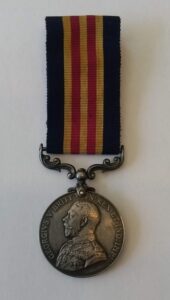
Awarded the MM 12 July 1918, London Gazette 30792, dated 9 July 1918.

Gunner Guy Edward Wells DCM MM Wounded
Admitted No 34 Fld Amb on 9 October 1918, SW to his back. To Regimental duty the following day.
The Armistice
Granted Permission to Marry
Gnr Guy Edward Wells DCM MM granted Permission to Marry, 22 January 1919.
Currie in Place des Tilleuls, Andenne, 31 January 1919
Note several members of the RNWMP in the crowd to keep the peace, as Sir Arthur Currie explains plans for the demobilization of the Canadian Corps still in Belgium.

Gunner Guy Edward Wells DCM MM likely present.

This was the morning Currie had just visited the communal cemetery prior to addressing the troops.

Though Arthur Currie still in Canada when the atrocity had occurred, here he stood relating the events to another officer.
Marriage of Gunner Guy Edward Wells to Lea Letimsonet
The CWRO photographic record reveals his wedding likely occurred at the beginning of March 1919. This would coincide with a grant of leave of 3 March 1919 to England.


The address below is just a few doors down from 5 Rue Janson.

The address today the business of Audrey Minne, Avocate and Jean Minnie, Avocat. Note some of the architecture still a perfect match to MIKAN No. 3394391 above.

Note Lea’s address in the service record: Mrs. Lea Wells 5 Rue Janson, Andenne

Honeymoon
Guy proceeded on leave to England, 3 March 1919. He returned to Belgium two weeks later.
Once again Gunner Guy Edward Wells DCM MM proceeded on leave to England on 7 April 1919. He would not return to Belgium as he embarked for Canada on 24 May 1919.

Death of Gunner Guy Edward Wells DCM MM
Gunner Guy Edward Wells DCM MM drowned accidentally on 9 August 1937, aged 48, and later buried at Pine Hills, Toronto under a Last Post Fund gravestone. Plot info: Section A, Lot 110#3.

The Royal Regiment of Canadian Artillery
Bombardier Guy Edward Wells DCM MM
Born Dublin, Ireland 11 Jun 1888; watchman; #207958; 97th Battalion, CEF; Royal Canadian Regiment, CEF; 3rd Heavy Battery, Canadian Garrison Artillery, CEF; 2nd Brigade, Canadian Garrison Artillery, CEF; date of death and interment unknown.

