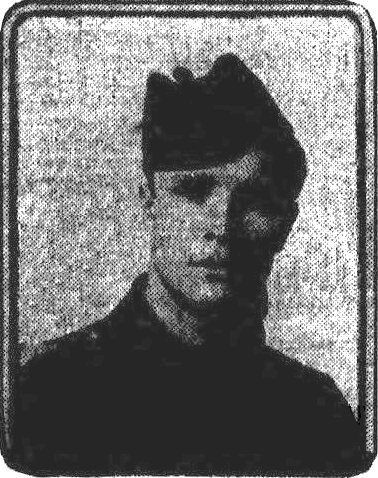
Corporal Hugh Arthur Rees MM 77840 the son of Samuel Lewis and Mercy Nixon Rees, of Westminster, London, England. Earning the Military Medal at Mount Sorrel, severely wounded and evacuated to England. This the story of his courage and heroism under fire, and the fight for his life following a plethora of devastating injuries.

Early Life of Corporal Hugh Arthur Rees
Hugh Arthur Rees the youngest of six children born to His Majesty’s Customs Clerk Samuel Lewis Rees and his wife, the former Mercy Nixon Williams. Samuel Rees a native of Brigdend, Glamorgan, Wales, and his wife born and raised in Harwich, Essex. The couple married in Richmond, Surrey, in 1880. By 1881 the newlyweds living in Copford in Essex.

Their oldest two children, Catherine Anne and Alan, born in nearby Dovercourt. Daughters Winifred Agnes and Dorothy Alice born in West Cowes on the Isle of Wight. The family rounded out with the arrival of sons Lewis Austen, in 1891, and Hugh Arthur, on 12 December 1892. Both born in Weymouth, Dorset. Hugh christened in the parish of Radipole, Dorset, on 9 April 1893.
Hugh’s older brother Lewis Austin Rees enlisted the month prior, on 23 September 1914 at Valcartier. Lewis had been a member of the Active Militia with the 50th Gordon Highlanders.
Enlistment of Private Hugh Arthur Rees
October 22, 1914 with 30th Overseas Battalion. Robust and 5′ 10″ tall, 144 pounds, a forester by trade. The 30th Battalion organized in November 1914 under the command of Lieutenant-Colonel J H Hall. Mobilized at Victoria, and recruited in Prince Rupert, Kamloops, East Kootenay and Victoria. Embarked from Halifax 23 February 1915 aboard MISSANABIE, SOUTHLAND and MEGANTIC. Disembarked England 6 March 1915, with a strength of 35 officers, 978 other ranks. Became a reserve battalion on 29 April 1915. Drafts to Princess Patricia’s Canadian Light Infantry (January 1915), to 15 battalions and machine gun companies. Absorbed into 1st Canadian Reserve Battalion on 4 January 1917.

Private Lewis Austin Rees overseas to France with the 16th Battalion on 13 February 1915. He would participate in the Second Battle of Ypres.

Lewis’ brother Hugh, spent a little extra time in England. Transferred to the 16th Battalion and on 3 May 1915, two weeks following the first gas attacks entered France.
16th Battalion
The 16th Battalion organized in Valcartier Camp in September 1914 initially composed of recruits from Victoria, Vancouver, Winnipeg and Hamilton. Commanded by Lieutenant-Colonel R.G.E. Leckie. Embarked Quebec 30 September 1914 aboard ANDANIA, and later disembarked England 14 October 1914 with a strength of 47 officers, 1111 other ranks. Disembarked in France 7 February 1915. 1st Canadian Division, 3rd Infantry Brigade. Reinforced by 14th Canadian Reserve Battalion, later by 11th Canadian Reserve Battalion.

In December of 1915, Hugh bid goodbye to his brother Lewis Austin Rees, now nominated for a Commission in the Royal Naval Air Service, following return from his leave. Private Hugh Arthur Rees also granted 7 days leave on 29 January 1916 and the following month, promoted to Corporal on 26 February 1916.

Mount Sorrel
The Battalion proceeded close to Fosse Way, now partially flooded, which it had vacated on the night of June 7th. Throughout the night of the 11th-12th rain continued to fall; the 12th was a wet, cheerless day, a steady. misty drizzle soaking the clothing of the troops who, during those hours, lay in the open.

On the evening of the 12th, deductions proved to be correct. It was then decided that the platoons in the leading wave of the attack would assemble in the disused trench; the second wave would take up position in the open about fifty yards behind the first in shell holes; and the third and fourth waves would assemble in the existing Canadian front line and immediate vicinity, which was the original area agreed upon.

At ten p.m. the 16th began to move up Fosse Way towards the assembly area, thus allowing two and three-quarter hours to make a journey of a little over one thousand yards. Every minute of this time was needed. The trench was partially filled with water; it was crowded, as the attacking troops on the right were also using it to reach their assembly positions; and the enemy, knowing that this was the only approach, kept up a steady fire upon it. As a consequence, some of the platoons of the leading waves were not in position at zero hour.

Zero Hour
At one-thirty a.m., exactly on time, the covering barrage fell and the troops advanced to the attack. The report on the desperate condition of the ground proved to be well justified; on a small scale it was the desolation that was to be known on the battlefields of the Somme and Passchendaele.

Halifax Objective
Numbers 1 and 2 Companies scrambled towards the “Halifax” objective as best they could; men fell down in the mud and were plastered with it; revolvers and rifles became coated with it, and were rendered useless.

The two sections of bombers on the right bombed from the flank of “Halifax” objective up the communication trench running from it towards “SP 11,”1 one of the old Canadian supporting points. There they overcame their opponents with the bomb and the bayonet; the two sections of bombers on the left moved along Observatory Ridge road.
Major R. Bell-Irving
The opposition in “Halifax” Trench seemed to have been dealt with. The men were being rallied for a further advance, when machine gun fire was opened on them from some point in the wood further on. Men began to drop. The flame from the gun could be seen in the midst of a black jumble of fallen trees; a rush was made towards it but with no success. Thereupon Bell-Irving, discovering a clearing on the left, dashed ahead and coming on the gun crew from a flank, disposed of them single-handed.

He had previously taken a dive into the mud, the muzzle of his revolver leading. That weapon was out of action, but subsequently he had secured the rifle and bayonet of a wounded 16th man, and thus armed, from the parapet of the German machine—gun emplace ment, bayoneted three of the gunners, and was lunging at a fourth
when his opponent grasped and held the rifle. By this time, however, some Battalion men had come up and Bell-Irving, very tired of bayonet exercise, left the rifle in the German’s hands. He asked the newcomers to attend to the matter, and securing another bayonet, went forward.
Montreal Objective
The barrage paused for twenty minutes in front of the “Halifax” objective, during which time it was possible to re-organize. The two leading waves by now had merged; the third and fourth had got clear of the enemy’s barrage. They were coming on, a short distance behind, and with the lift of the artillery, re-started the advance towards the “Montreal” objective in good order.
Duffill (killed by explosion of enemy shell at Sanctuary Wood), Fraser (KIA 11/14-6-16), Halliday (KIA 11/14-6-16 trenches near Mt Sorrel), McMillan, McMinn, Pullinger the other casualties? only Pullinger buried at Bedford House….rest Menin Gate

At the “Montreal” objective the enemy submitted after little fight; that objective was captured with ease, and, during the halt there, all lines became one.
Winnipeg and Vancouver Objectives
The ground still to be covered was much more open, the attack was able to move forward with greater steadiness to “Winnipeg” and “Vancouver,” the further objectives, and, once there, they found the enemy completely demoralized. The Germans offered no fight; the Battalion walked unmolested into its final objective.
Speaking of the condition the men were in when they came out of the attack, an officer writing a few days afterwards said “Never in the history of the Battalion have I seen the men in such a state, mud from head to foot, hungry, cold, exhausted.”

Regiment History
The casualty table tells its own story of how hardly contested the fighting was on all sides. The Lewis gunners, considering their small numbers, had an especially trying time. In this, their first action with the Battalion as Lewis gunners, they were determined to show their worth. They got into the thick of the attack, and suffered heavily.
The crew of Number 1 gun, with the exception of two men, were put out of action in No Man’s Land before zero hour. The gun changed hands five times, but the two men left with it carried it through to the final objective and set it in position.

Corporal Rees of Number 2 gun, who was carrying the weapon, scrambled along the top of the communication trench, shooting with his revolver at the fleeing Germans. The-same corporal, on reaching “Vancouver” Trench, discovered a German machine gun which he immediately got into action. But luck finally set against him; three or four hours after daylight an enemy shell lit in the trench where he was posted and killed Rees and the whole of his crew. Number 5 gun team, with the exception of one man, who saved the gun, were all put out of action in the preliminary barrage.
Casualties
The casualties amongst officers exceptionally severe, even for the 16th. Between June 3rd and 14th ten were killed, a loss in officers greater than that sustained by the Battalion in any other engagement of the war. Three of these, Lieutenants Rose, E. B. Allan (RAILWAY DUGOUTS BURIAL GROUND (TRANSPORT FARM)), and H. McCoy (RAILWAY DUGOUTS BURIAL GROUND (TRANSPORT FARM)), killed during the first few days of the period mentioned when the Battalion in brigade support.
At the final objective two more officers hit, Captain W. F. Kemp and Lieut. R. F. L. (Pete) Osler (LIJSSENTHOEK MILITARY CEMETERY), the latter fatally. Osler made light of his wound, he refused to be carried out, and at the casualty clearing station died of complications. Another of the bright young lives gone. Osler, like his friend McCoy, had the buoyant, spontaneous disposition, typical of wholesome Canadian youth, and had won a high place in the affection of his comrades.

Final action
The battle over, but the 16th Battalion’s list of officer fatalities had not closed. A question arose as to whether the attacking troops at the extreme left of the 3rd Brigade battle from were on their true objective. A special reconnaissance of that flank ordered: on the night of 13-14th June, Captain Ross Cotton and Lieutenant Roy Sachs, 16th officers attached to the 3rd Brigade Headquarters, detailed, with a party of bombers, to proceed to the left, and clear up the situation.

The party got as far as Valley Cottages and there, the hostile shelling having quietened down, decided to walk up Observatory Ridge road. It had traversed it but a short distance, however, when the enemy renewed his bombardment and Cotton and Sachs (LIJSSENTHOEK MILITARY CEMETERY) both killed.
Relief
By three a.m. June 14th, the Battalion relieved from its positions in the captured territory, and went back to corps reserve at Patricia Lines. a camp some little distance out of Poperinghe. Thereafter, until July 16th, it moved from corps to divisional reserve in the rear area, resting, re-organizing, absorbing reinforcements, or doing working party duty whilst in brigade reserve and support.

During the attack the 16th Bn lost 257 killed and wounded. One of the wounded, Corporal Hugh Arthur Rees evacuated to England with severe injuries.

Corporal Hugh Arthur Rees wounded 13 June 1916, GSW left arm (multiple), Back (multiple), Right hip (multiple), left thigh (multiple).
Brave Battalion
In Mark Zuehlke’s book, Brave Battalion, Remarkable Saga of the 16th Battalion (Canadian Scottish), Rees’ heroic action in battle is described:
“Groups of Germans could be seen near the trenches attempting to rally a counterattack. Seeing this and also spotting a German machine gun nearby, Cpl Hugh Arthur Rees, a machine gunner with No. 2 team, brought the weapon into action. For the next four hours, as Vancouver was increasingly pounded by German artillery, Rees kept the gun in operation and broke up one attempted counterattack after another, even when it became clear the enemy artillery were attempting to zero in on him. Finally a shell found the mark and the crewmen with him were all killed while Rees was badly wounded. It was an act of heroism that would see the British born twenty-three-year-old awarded a Military Medal for valour.”
Evacuated to England
Corporal Hugh Arthur Rees admitted to Reading War Hospital on 19 June 1916. All his wounds septic, he will spend 54 days in hospital. Rees continued to fight, having a better chance for recovery with all but two of his wounds healed.

- Four pieces of shrapnel removed on 23 June 1916, three from back and one from right leg.
- Swelling in right groin on 11 July 1916. Cannot straighten right leg. Complains of great pain if any attempt made to straighten leg.
- X-rayed on 13 July 1916, with 12 large fragments in back and pelvis, numerous small fragments in right hip. Pelvis fracture at sacro-iliac.
- Several attacks of diarrhea with septic temperature by 18 July 1916.
- Condition progressively worse on 26 July 1916. Temperature 104, pulse 126.
- Pathologist reports an organism of pneumococcus type isolated from blood, 28 July 1916.
- General condition of patient much weaker, 6 August 1916.

Malignant Endocarditis
Endocarditis develops in three stages. A hundred years following the Great War, 20% of people with the infection still die within 30 days of infection.
- Bacteremia: Microorganisms enter the bloodstream.
- Adhesion: The microorganisms attach to damaged areas of the heart’s inner lining.
- Colonisation: The organisms multiply, forming vegetation and causing inflammation.
Patient died of malignant endocarditis on 12 August 1916, 17 days following diagnosis.

Corporal Hugh Arthur Rees MM commemorated on Page 152 of the First World War Book of Remembrance.

Medal Set of Corporal Hugh Arthur Rees MM
In addition to the Military Medal, Corporal Hugh Arthur Rees was eligible for the 14-15 Star, and also received the British War Medal and Victory Medal.

READING CEMETERY
Berkshire, United Kingdom
The War Graves Plot situated at the back of the cemetery, in the right hand corner from the entrance. A Screen Wall Memorial commemorates those buried in Plot 72 and those buried in other parts of the cemetery whose graves are not marked by headstones.

A/C. Screen Wall.

READING CEMETERY on the eastern side of the town at the junction of the road to London (A4) and to Wokingham (A329). Plot 72 is the War Graves Plot and contains 97 graves. This plot situated at the back of the cemetery, in the right hand corner from the entrance. The Plot consists of a grassed-over area on which stands a Cross of Sacrifice; the graves are unmarked and commemoration of the casualties buried there is also on a Screen Wall at the back of the Plot. The cemetery contains 204 War Graves.
Please Subscribe for New Post Alerts
