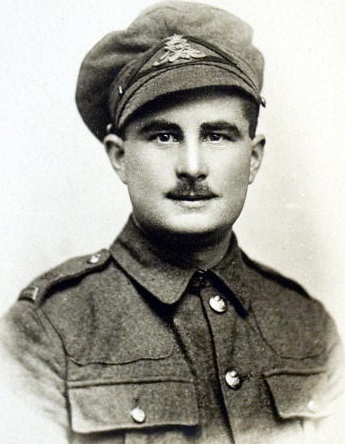
Gunner Norman Joseph McMahon 2001072 son of Thomas (Teddy) J. McMahon (Father) and Mary (Quinn) of Dorset Street, Port Hope, Ontario, born on 21 May 1896 in Port Hope.

Attestation
Previous military service of eight months in the 39th Battalion, at this time, Norman stood 5 Feet 9 Inches with ruddy complexion, grey eyes and black hair. A Roman Catholic and Fisherman by trade, then attested 21 February 1917 with the Cobourg Heavy Battery.

Last Will
Gunner Norman Joseph McMahon completes his will later on 21 March 1917, bequeathing all to his father Teddy. Witnessed by his friends, Harold (Harry) Frederick Cunningham 3257024, and James Newbury Houston 5679, both Caretakers of Cobourg Armouries also enlisted with the Cobourg Heavy Battery. Harry served in Canada, discharged 23 April 1918, and James died later on 22 June 1950.
T.o.S. by the Reserve Brigade of the Canadian Field Artillery later on 22 April 1917. Gunner Norman Joseph McMahon embarked Halifax on 10 May 1917, later disembarking in Liverpool on 22 May 1917.

S.o.S. Reserve Brigade to 2nd Brigade, Canadian Reserve Artillery Depot on absorption, Shorncliffe, 22 June 1917, and Gunner Norman Joseph McMahon S.o.S. to the 11th Siege Battery, Shorncliffe, later on 28 June 1917.
11th Canadian Siege Battery
Organized at Shorncliffe in May 1917 from personnel of Reserve Artillery Depot. Arrived in France 18 October 1917.
Personnel later absorbed into 1st, 5th and 8th Canadian Siege Batteries. Gunner Norman Joseph McMahon proceeded overseas to 1st Canadian Siege Battery from Seaford, 18 October 1917 and later arrived at unit 3 November 1917.

1st Canadian Siege Battery
Initially organized in June as No.1 Heavy Battery Depot under the command of Lieutenant-Colonel F. Minden Cole. No.1 Overseas Battery Canadian Siege Artillery on 1 October 1915, and later mobilized at Halifax, recruited in Montreal, Saint John and Cobourg. Left Halifax 22 November 1915 aboard SAXONIA, later arrived in England 30 November 1915 with a strength of 6 officers, 210 other ranks.

Became 97th Canadian Siege Battery, Canadian Siege Brigade on 24 February 1916., and later arrived in France on 14 June 1916. Became 1st Canadian Siege Battery on 29 January 1917, and later with 1st Canadian Heavy Artillery Group, which, on 12 January 1918, became 1st Brigade Canadian Garrison Artillery.

Leave
Gunner Norman Joseph McMahon admitted to No.11 Canadian Field Ambulance, 16 November 1917 with Influenza (first wave), later admitted to No.98 Field Ambulance the next day, and finally discharged on 23 November 1917.

9 November 1917 the last day in action in the Ypres Salient. Then, early on the morning of 13 December 1917 as the unit prepared to move south, Gunner Clemence William Hewitt 91764, living above ground and acting as Mr McDowell’s batman, had orders to call the latter at 5:00 a.m. The former about to enter the corridor leading into the officer’s sleeping quarters when confronted by a sheet of flame whereupon he dashed through same and with great presence of mind brought Lt Col Stewart to safety.

In the meantime, three officers succeeded in escaping by way of the ventilation shaft, but after this it was impossible to render any assistance to those inside, and 17 officers burnt to death including Lieutenant John William McDowell of this unit and a Brigadier-General. The origin of the fire could not be ascertained.
Influenza
Gunner Norman Joseph McMahon granted 14 days leave to UK, along with two other ranks, later on 28 October 1918. Immediately upon returning to his unit, admitted to No.5 Canadian Field Ambulance, Influenza (third wave) on 13 November 1918 and later transferred to No.1 Canadian Casualty Clearing S tation, 14 November 1918. Gunner Norman Joseph McMahon died the following day, 15 November 1918. Buried later in Auberchicourt British Cemetery on 16 November 1918.
Auberchicourt British Cemetery
Auberchicourt a commune mining village in the Department of the Nord, 11.5 kilometres east of Douai on the road to Valenciennes, the cemetery then one kilometre west of the village on the northside of the road to Erchin, 300 yards away from the Communal Cemetery.