CEFRG.ca

Category: Soldiers

Between 1914 and 1919, over 650,000 Canadians served at home and overseas during the Great War. On the Western Front in Belgium and France, Canadian soldiers of the Great War distinguished themselves in numerous battles, including Second Battle of Ypres, Battle of Vimy Ridge, and Second Battle of Passchendaele. In Canada’s Last Hundred Days of the Great War, Canadian soldiers at the sharp end of the spear breaking through the enemy’s formidable trench defences, the Hindenburg Line. Their efforts have inspired these soldier stories.

Collections

Many collections used to bring the soldier stories to life. First, and foremost, the Personnel Records of the soldiers serving in the Canadian Expeditionary Force (CEF). This collection, like the others to follow, digitized and made available by Library and Archives Canada (LAC). Secondly, the War Diaries of the CEF often provide vital information about a soldier’s life not contained in their service file. Finally, Circumstances of Death (CoD), War Graves Registers (GRRF), and Veterans Death Cards provide further information on The Fallen. These three collections in conjunction with records of the Commonwealth War Graves Commission (CWGC) vital to cases of identification and recovery of The Missing.

Courts Martial Records (FGCM)

Additional collections used to present the soldier stories include Courts Martial Records. Courts martial had the authority to try a wide range of military offences that resembled civilian crimes like fraud, theft or perjury. Others, like desertion and cowardice – purely military crimes. Records of individual courts martial consist of an average of 20 to 25 documents, mainly standardized forms. These document the trial and the charges under the Army Act.

MIKAN photo collection

Finally, the most powerful way of bringing soldier stories of the Great War to life, the images of the MIKAN collection digitized by LAC.  Often complementing these photos – images held by the Imperial War Museum (IWM), some of which also contain images captured by the Official Canadian War Photographers (CWRO) during the Great War. Both LAC and IWM have film collections which further bring the reality of the soldier stories of the Great War to life.

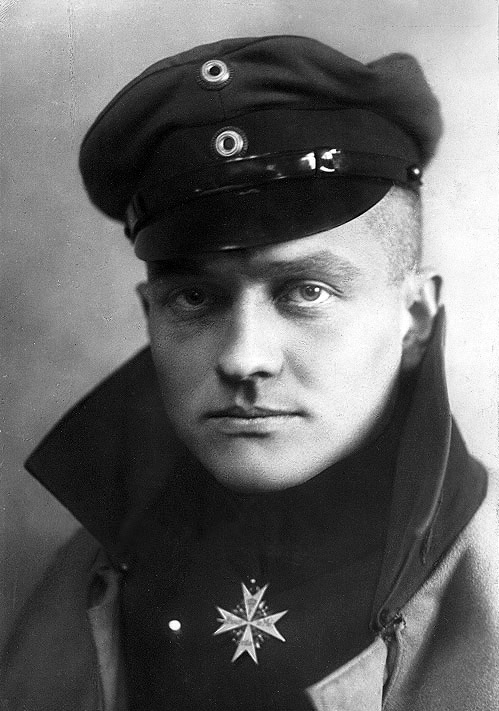
  • Manfred Albrecht Freiherr von Richthofen’s Mysteries in the Great War

    Manfred Albrecht Freiherr von Richthofen’s Mysteries in the Great War

    Greatest Mysteries of the Great War

    The World’s Greatest Aviator, Baron Manfred Albrecht Freiherr von Richthofen’s mysteries?

    Hold the phone!

    There is another mystery besides who was the one to bring down the World’s Greatest Aviator?

    Corporal E. J. McCarty

    With the passing of Corporal E. J. ‘Ted’ McCarty’s mother in 1935, the definitive answer to the first mystery will never be explained.

    Ted the medical orderly of No. 3 Squadron who had helped perform the autopsy (and had surreptitiously claimed the very bullet which had passed through MvR’s body). The bullet lost in 1935 “when his mother died and he burned all sorts of papers and the bullet was lost in the debris”.

    As most afficionados of MvR appreciate, we will never know who’s bullet brought down the World’s Greatest Aviator. Absolutely, it was not from the guns of Canadian pilot Roy Brown. Today, we know it was either the braggart Sergeant Cedric Popkin (firing a Vickers machine gun), or the ever-humble Gunner Robert Buie (firing a Lewis gun). If examined by a forensic technologist, simple to attribute the bullet to either the Vickers or Lewis gun, not both.

    Grave 22 April 1918. The grave is later desecrated on the night of 22 April. von Richthofen's Mysteries
    Grave of Manfred Albrecht Freiherr von Richthofen, 22 April 1918. The grave is later desecrated on the night of 22 April. von Richthofen’s Mysteries

    Most traveled remains

    CEFRG not the first to point out the corpse of MvR perhaps the most-traveled remains in history. First buried in Bertangles Communal Cemetery, 22 April 1918. Then, to Deutscher Soldatenfriedhof Fricourt in 1925, and later the same year, exhumed under the direction of MvR’s brother Bolko, and returned to Germany for a state funeral in Berlin. MvR remained here by the Berlin Wall, until after it’s fall, when a new autobahn over the area forced the exhumation of most remains in the cemetery. Finally, MvR’s family had their wish, and the World’s Greatest Aviator now rests in the family plot at Südfriedhof Wiesbaden (photo from 22 April 2018 – the 100th anniversary of his first burial).

    von Richthofen's Mysteries The former burial location of Rittmesiter Manfred Albrecht Freiherr von Richthofen, now occupied by Soldat Sebastian Paustian and Musketier Franz Greis, Deutscher Soldatenfriedhof Fricourt, 16 April 2016. CEFRG von Richthofen's Mysteries
    The former burial location of Rittmesiter Manfred Albrecht Freiherr von Richthofen, now occupied by Soldat Sebastian Paustian and Musketier Franz Greis, Deutscher Soldatenfriedhof Fricourt, 16 April 2016. von Richthofen’s Mysteries CEFRG

    CEFRG now forced to admit it is the skull of MvR, not the entire remains, which is the most-traveled skull in history!

    What?

    Manfred Albrecht Freiherr von Richthofen. Original Cross of Fricourt, displayed in Berlin. von Richthofen's Mysteries
    Manfred Albrecht Freiherr von Richthofen. Original Cross of Fricourt, displayed in Berlin. von Richthofen’s Mysteries

    Yes, for at least fifty years, MvR’s remains disassociated.

    Have the remains been united since?

    This is the second mystery regarding the World’s Greatest Aviator that also, may never be fully qualified.

    P. J. Carisella

    Author P. J. Carisella recovered the remains of MvR (less the skull) from Bertangles Communal Cemetery in 1969.

    If this story is hard to believe, his attempts to return the remains to Germany even more unbelieveable.

    Eventually, a Colonel at the German Embassy in Paris accepted Carisella’s requests. Firstly, to return the original plate from the cemetery at Bertangles (which unknowingly at the time, placed in the hands of MvR’s mother at the state funeral in Berlin).

    Secondly, P. J. Carisella asked that MvR’s remains forwarded to his personal friend, Baron Bolko von Richthofen. Carisella had just seen Bolko at the anniversary observances in Neuberg, Germany.

    Manfred Albrecht Freiherr von Richthofen, Südfriedhof Wiesbaden, 22 April 2018. CEFRG von Richthofen's Mysteries
    Manfred Albrecht Freiherr von Richthofen, Südfriedhof Wiesbaden, 22 April 2018. von Richthofen’s Mysteries CEFRG

    Mysteries

    Were the remains of MvR ever forwarded to Bolko?

    What became of the remains, were they ever reunited?

    Did the state secretly reunite the remains to save face?

    CEFRG has been contacted in the past by a member of MvR’s family, and hopes she will do so again, and perhaps allow us to resolve this mystery.

    MvR – Baron Manfred Albrecht Freiherr von Richthofen, the Greatest Aviator the world will ever know!

    von Richthofen's Mysteries
    General Ernst von Hoeppner, the Commander of the German Air Force, conversing with Anthony Fokkerf. Baron Manfred von Richthofen is immediately behind the General. The aeroplane shown is a Fokker Triplane, serial number FI102/17. The gentleman to the right of MvR is OzbV Karl Bodenschatz, JG1 and von Richthofen’s adjutant. Far right is Jasta 6 CO Ltn Hans Adam.© IWM (Q 54397)

    ← Back

    Thank you for your response. ✨