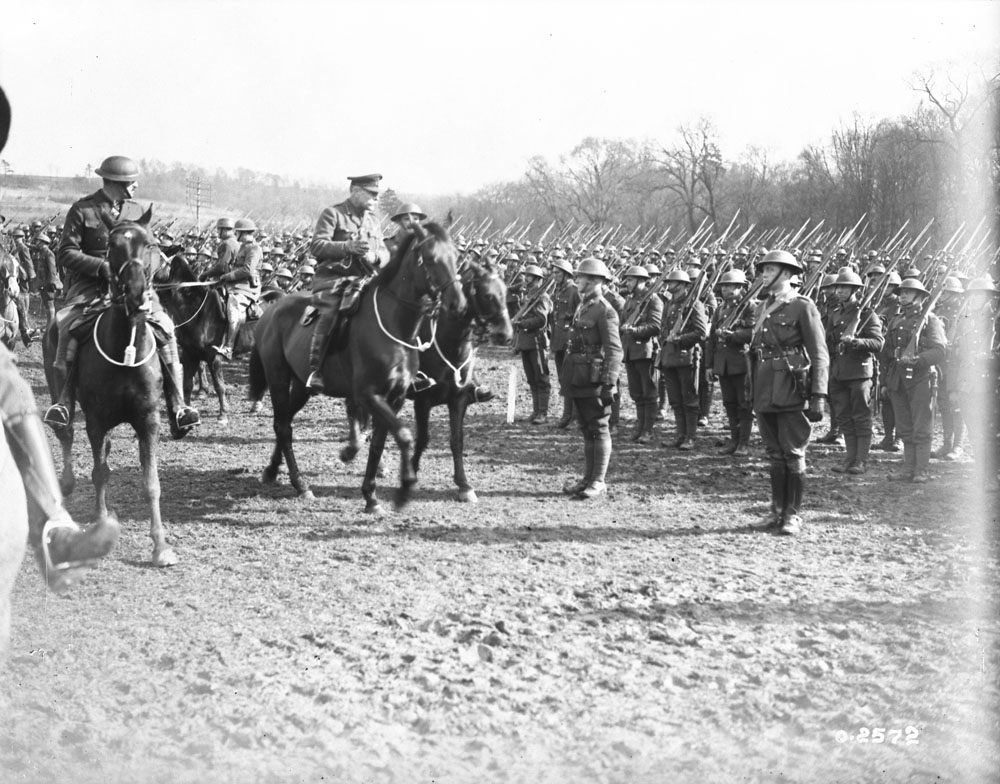
Indigenous Soldiers
Private Abel Watetch of Piapot Reserve, Edgeley, Saskatchewan married to Mary Francis Watetch with two children, Mary Madeline age 3, and a baby.

Enlistment of Private Abel Watetch
Abel Watetch 907650 enlisted on 4 April 1916 with the 195th Overseas Battalion in Regina, Saskatchewan. Standing 5′ 8″ tall with dark complexion, brown eyes, and black hair – 31 years 10 months of age.

Pte Watetch embarked Halifax on 1 November 1916, per SS EMPRESS OF BRITAIN, later disembarking in Liverpool on 11 November, and taken on strength of the 32nd Reserve Battalion.
195th Battalion
Organized in February 1916 initially under the command of Lieutenant-Colonel A C Garner. Mobilized at Regina, and recruited in Regina. Embarked from Halifax 1 November 1916 aboard EMPRESS OF BRITAIN, and later disembarked England 11 November 1916 with a strength of 31 officers, 998 other ranks. Drafts of 174 to 5th Battalion and 188 to 102nd Battalion in November 1916.
Private Abel Watetch one of the 188 Other Ranks to proceed on draft to the 102nd Battalion, 27 November 1916.
102nd Battalion
Organized in November 1915 initially under the command of Lieutenant-Colonel J W Warden. Mobilized at Comox, and recruited in northern British Columbia. Embarked from Halifax 20 June 1916 aboard EMPRESS OF BRITAIN, and later disembarked in England 28 June 1916, with a strength of 37 officers, 968 other ranks and later disembarked in France 11 August 1916 as part of the 4th Canadian Division, 11th Canadian Infantry Brigade, and later reinforced by 16th Canadian Reserve Battalion.

Battle of the Somme
Private Abel Watetch joined the 102nd Battalion in France on 28 November 1916. The ranks of the 102nd Bn woefully thin. Death, wounds and sickness had claimed many on the Somme.
When the battalion entered the Vimy Sector, the latter had a reputation for quietness and peace unequalled in any other sector – casualties few.
The operations of the 102nd Bn now clearly divided into three distinct sections. The first, a series of five tours in the trenches with six days’ interval between each, lasting from December 21st, to the end of March, 1917. The second, the three day tour which included the Battle of Vimy Ridge. The third, a series of three tours in the area lying between the crest of the Ridge and the suburbs of Lens, comprising the actions known in the battalion as the First and Second Triangle operations.

Battle of Hill 70
On 17 August 1917 an operation on a more extended scale carried out, with the 4th Brigade co-operating on the left. The object of this offensive to reorganize the line, which had been handed over in a badly dented condition, gaps existing between the companies and between our left flank and the adjoining battalion, the 18th. These gaps occupied by the enemy, and decided by a combined offensive to straighten out the line and establish a safe connection between all the units holding. The barrage opened at 4.32 am.
During the operation, Abel suffered gas poisoning near COTTON TRENCH. One of 86 Other Ranks wounded during the operation.
Gassed
On 27 August 1917, Private Abel Watetch admitted to 18th General Hospital, Camiers. Finally discharged to Base Depot, Etaples on 10 November 1917.
SoS of the 102nd Battalion on transfer to Canadian Labour Pool on 18 November 1917.
Abel granted 14 Days Leave on 16 February 1918. Transferred to the 6th Canadian Area Employment Company on 28 February 1918.

Return to the 102nd Battalion
SoS to 102nd Battalion on 17 July 1918 from the 6th Canadian Area Employment Company. Private Abel Watetch catches up with his unit near Roclincourt.
Demobilization
Private Abel Watetch discharged 1 April 1919.
Abel’s brother Harry Ball wounded and lost his leg on April 7 1917 at Vimy Ridge. They both had received a medal from the French government for their sacrifice. The Canadian Prime Minister Mackenzie King came to the Piapot Reserve, Saskatchewan in 1935 and sat down to smoke a peace pipe with them for their heroic service.

Abel Watetch died 20 November 1964 at Veterans Pavilion Hospital, Regina, Saskatchewan. Buried at Riverside Memorial Park Cemetery. Great-grandson Elvin Brown inspired this story.
Please Subscribe
Please subscribe to CEFRG to be notified by email when there are new posts. Subscription is free, and your email kept confidential.